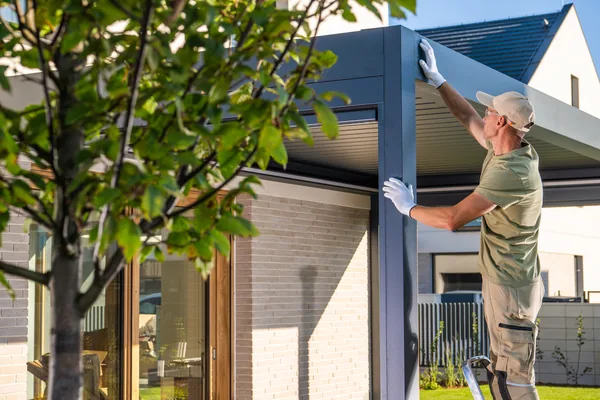
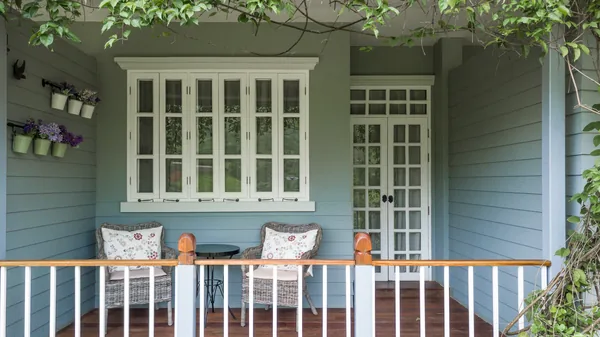
Decks and fences get the worst of the weather. They sit in full sun through long summers, soak up afternoon storms, and stay damp under trees and pollen. Unprotected wood turns gray, cracks and grows mildew, and boards start to cup and split.
Stain only works as well as the surface under it. Most of a good staining job is cleaning and preparing the wood so the stain soaks in evenly and holds.
Cleaning, brightening and sanding
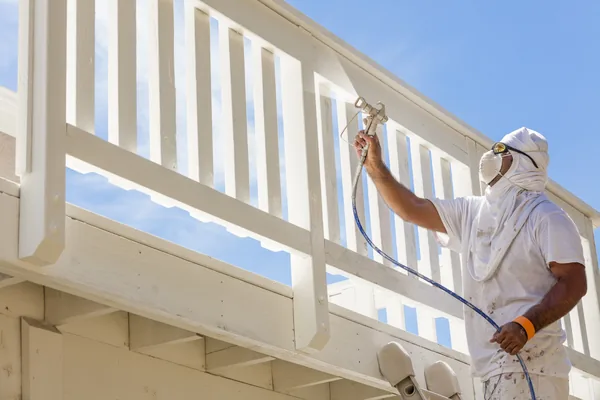
We start by washing away dirt, mildew and old flaking finish at a pressure that will not tear up the grain. A wood brightener then restores the natural color of weathered boards and opens the surface so stain can absorb. Rough or raised areas are sanded, and loose boards and popped nails are dealt with before staining.
- Wash to remove dirt, mildew and loose finish
- Wood brightener to restore color and open the grain
- Sanding of rough, raised or splintered areas
- Loose boards and popped fasteners secured
Solid or semi-transparent stain
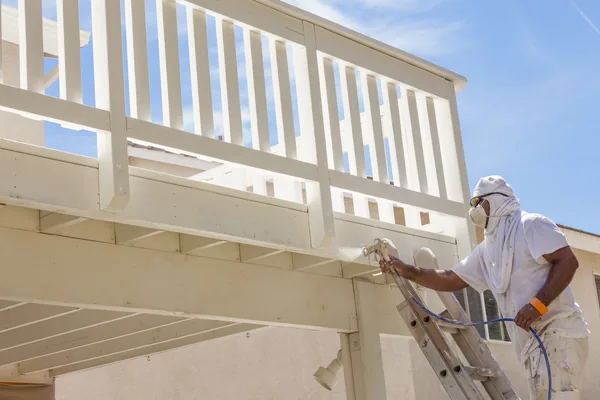
Semi-transparent stain lets the grain show and gives a natural wood look. It suits newer or well-kept wood. Solid stain covers like paint while still soaking in, which hides weathering, mismatched boards and old stain. It is often the better choice for older decks. We will look at your wood and tell you which one it can take. Going from solid back to semi-transparent is difficult, so it is worth getting that choice right the first time.
Railings, fences and sealing
Railings, balusters and fence pickets have far more edges and faces than a deck floor, and they need careful brushing so every side is coated, including the end grain where water soaks in first. Once stained, the wood is sealed against sun and rain. Walking surfaces wear fastest, so decks need refreshing sooner than fences, and we can tell you what to watch for.